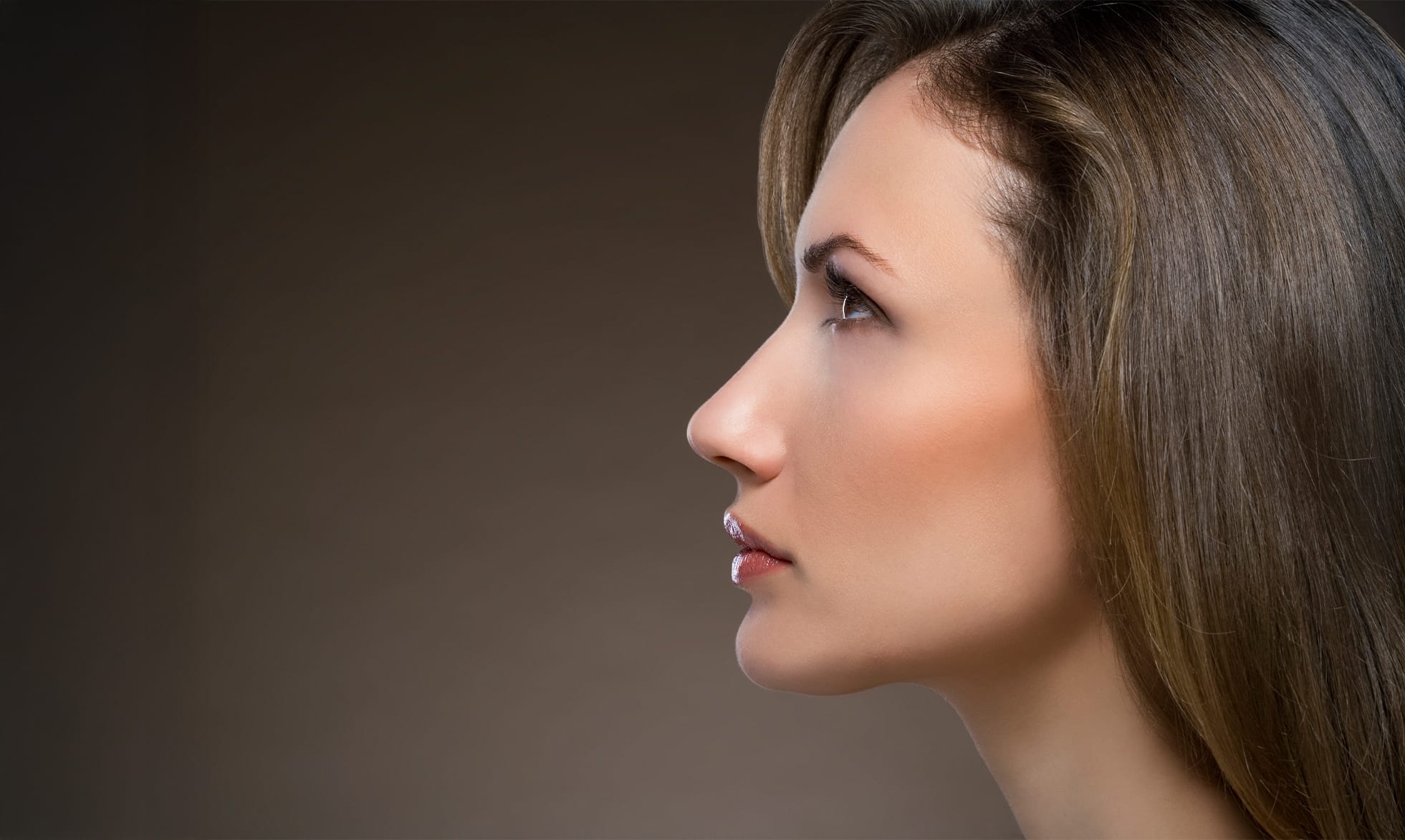
Yes, rhinoplasty can reduce the size of your nose while still preserving the features that make your face look like you. Dr. Peter Vila, a double board-certified facial plastic surgeon in Portland, approaches every rhinoplasty with facial harmony as the goal, using conservative, precise adjustments rather than dramatic resculpting. In this blog, we'll look at how a smaller nose and a natural appearance can coexist, whether open or closed technique changes that outcome, what separates a subtle result from an overdone one, and who tends to be the best candidate for this approach.
This information is provided for educational purposes only and does not replace a consultation with a board-certified plastic surgeon. Outcomes, risks, and suitability vary from patient to patient.
How Does Rhinoplasty Reduce Nose Size While Preserving Natural Features?
Reducing the size of a nose comes down to carefully sculpting cartilage and bone rather than removing structure wholesale, since taking away too much can compromise both the look of the nose and how well it functions afterward. During a rhinoplasty in Portland, Dr. Vila separates the skin and soft tissue from the underlying framework, then reshapes that framework with small, deliberate adjustments before redraping the skin over it.
Achieving a smaller nose that still looks natural requires:
- Reducing a dorsal hump or bridge without over-narrowing the bridge itself
- Refining a bulbous or drooping tip while keeping its projection proportional to the rest of the face
- Narrowing flared nostrils only enough to restore balance, not to the point of looking pinched
- Maintaining enough cartilage support to preserve normal breathing function
The goal, as Dr. Vila describes it, is for the nose to act as a bridge between the upper and lower face rather than a feature that draws attention to itself, directing focus instead toward the eyes and the smile.
Does Open or Closed Rhinoplasty Give a More Natural Result?
Technique choice affects precision more than it affects how natural the final result looks, since both open and closed rhinoplasty can achieve subtle, harmonious outcomes when performed correctly. The right choice depends on how much restructuring the nose actually needs rather than on which method inherently looks better.
Closed, or endonasal, rhinoplasty places incisions entirely inside the nostrils and works well for more limited adjustments, such as smoothing a small bump or lightly refining the tip. Open rhinoplasty places a small incision on the columella, the strip of skin between the nostrils, giving Dr. Vila direct visibility of the cartilage and bone framework for more significant restructuring, such as substantial size reduction.
Both approaches, in Dr. Vila's hands, are built around the same underlying goal of conservative, structure-preserving change. The incision from an open approach heals into a fine line that becomes difficult to detect once fully matured, so choosing open rhinoplasty for a more complex reduction doesn't come at the cost of a visible scar.
What Signs Point to an "Overdone" Rhinoplasty?
An overdone rhinoplasty usually results from removing too much structure rather than too little. Warning signs include a nose that looks scooped-out or overly narrow from the front, a tip that appears pinched or unnaturally upturned, and a bridge that looks abruptly different from the rest of the facial profile.
Facial plastic surgeons nationwide have been moving away from this kind of dramatic resculpting, and there is a clear shift among its members away from late-stage, visibly overdone results and toward earlier, more subtle, and more strategic approaches focused on natural-looking outcomes. That shift reflects exactly the philosophy Dr. Vila applies at his Portland practice.
Who Is a Good Candidate for a Natural-Looking Nose Reduction?
Good candidates share a few common traits that make conservative, natural-looking results achievable. Ideal candidates for this approach:
- Are in generally good health with no major medical concerns
- Do not smoke, since smoking impairs healing
- Can stop taking blood-thinning medications before surgery if needed
- Have realistic expectations about what subtle changes to their specific anatomy can achieve
Patients with thicker nasal skin or more limited cartilage may see results emerge more gradually, since some swelling can persist for up to three months even though most visible healing resolves within seven to ten days.
How Does Dr. Vila Ensure Natural Results During Consultation?
Setting expectations accurately before surgery is one of the most reliable ways to avoid an unnatural result. Dr. Vila uses digital photography and computer-assisted imaging during consultation so patients can see a realistic preview of their probable outcome rather than guessing at it.
This step matters because most rhinoplasty patients are relatively young: nationally, roughly 60 percent of rhinoplasty procedures are performed on patients between 18 and 34, according to global data from the International Society of Aesthetic Plastic Surgery, meaning many patients are choosing their nose for the first time and have limited context for what "natural but smaller" should look like on their own face. Imaging closes that gap before a single incision is made.
What Risks Should You Discuss Before a Size-Reducing Rhinoplasty?
Every surgical rhinoplasty carries some degree of risk, and understanding those risks before surgery helps patients make an informed decision. Potential risks include infection, bleeding, adverse reaction to anesthesia, asymmetry, and the possibility that additional surgery may eventually be needed to refine the result.
Reducing nose size specifically carries an added consideration: removing too much structural support can compromise the internal nasal valve and make breathing harder, even when the outward appearance looks exactly as intended. Dr. Vila addresses this directly by preserving adequate cartilage and bone support during size reduction, rather than treating breathing function as a secondary concern to be dealt with later.
Patients should also understand that swelling can mask the final result for months. While most visible swelling and bruising resolve within seven to ten days, subtle swelling around the tip can persist for up to three months, and full definition may continue to refine for up to a year. Setting this expectation in advance prevents unnecessary worry during the early weeks of recovery.
Frequently Asked Questions About Natural-Looking Rhinoplasty
How small can a nose be made without looking unnatural? There's no universal number, since the answer depends on a patient's existing bone structure, skin thickness, and the proportions of their other facial features. Dr. Vila evaluates each face individually rather than applying a standard target size to every patient.
Does thinner nasal skin make a smaller nose easier to achieve? Thinner skin does tend to show subtle changes more precisely, while thicker skin can mask fine adjustments and take longer for final results to become visible. This is one of several anatomical factors Dr. Vila assesses before setting expectations for how dramatic a change is realistic.
Can non-surgical options achieve a smaller-looking nose? Not exactly. A non-surgical rhinoplasty uses filler to smooth irregularities and create the illusion of better proportion, but it cannot actually reduce the size of the nose the way surgical rhinoplasty can, since it only adds volume rather than removing structure.
What if I'm unhappy with how small my results turned out? This is exactly why Dr. Vila uses digital imaging during consultation, so patients can weigh in on the degree of change before surgery rather than after. If a patient's expectations shift once healing is complete, that conversation belongs in a follow-up appointment rather than a self-diagnosis.
How soon can I see my final result after size-reducing rhinoplasty? Most of the visible swelling resolves within the first ten days, giving a rough preview of the outcome, but the nasal tip in particular continues refining over several months as the last of the swelling resolves and skin settles fully over the new structure.
Will scars from the procedure be visible on a smaller nose? Generally, no. Closed rhinoplasty incisions sit entirely inside the nostrils and are never visible externally, while the open approach's columella incision heals into a fine, well-concealed line that most people won't notice even up close once fully healed.
Want a Smaller Nose That Still Looks Like You? Ask Dr. Vila
A smaller nose and a natural appearance aren't mutually exclusive outcomes — they're the standard Dr. Peter Vila works toward on every rhinoplasty he performs. His training through Northwestern University's fellowship in Facial Plastic and Reconstructive Surgery, combined with digital imaging during consultation, gives patients a clear, realistic sense of their result before committing to surgery.
If you're considering a rhinoplasty in Portland and want a nose that's smaller without looking "done," schedule a consultation with Dr. Vila to talk through your specific goals, your anatomy, and what a realistic, natural-looking outcome would look like for your face specifically.
Sources
- American Academy of Facial Plastic and Reconstructive Surgery. "AAFPRS Reveals the Trends Defining Facial Plastic Surgery." https://aafprs.org/Media/Press_Releases/New_Trends_in_Facial_Plastic_Surgery.aspx
- International Society of Aesthetic Plastic Surgery. "ISAPS Global Survey 2024." https://www.isaps.org/discover/about-isaps/global-statistics/global-survey-2024-full-report-and-press-releases/
- American Society of Plastic Surgeons. "2024 Plastic Surgery Statistics Report." https://www.plasticsurgery.org/documents/news/statistics/2024/cosmetic-procedure-trends-2024.pdf